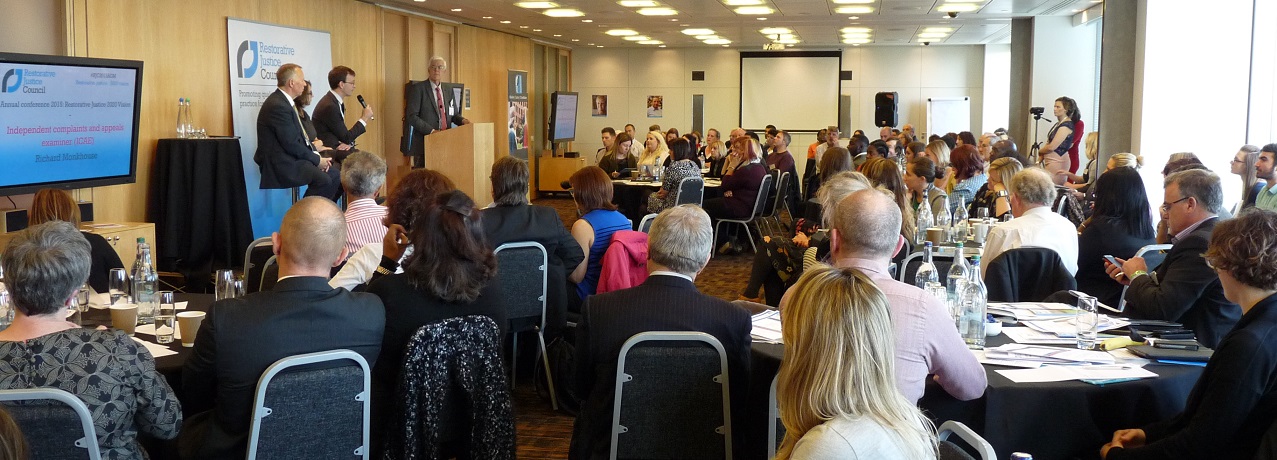
The room was full of enthusiasm and expertise at this year’s AGM and annual conference, which was open to both RJC members and non-members. Over 130 delegates, members and RJC staff came together on Wednesday 18 November, to celebrate achievements in the field and create a collective vision for the future of restorative justice.
At the AGM and annual conference, which took place on 18 November 2015 in Canary Wharf, the RJC and its members and supporters made a point of acknowledging the high quality restorative work of individuals and organisations in the past year.
On Wednesday 18 November, a debate took place in the House of Lords on restorative justice. The debate - which took place during International Restorative Justice Week - followed a question asked by Lord Blair of Boughton, the former Commissioner of the Metropolitan Police Service.
Devon Youth Offending Restorative Justice Service has become the latest organisation to attain the Restorative Service Quality Mark (RSQM).
The RSQM is a rigorously assessed quality mark which demonstrates that services are delivering good quality, safe restorative services. Devon Youth Offending Restorative Justice Service joins 24 other RSQM holders, who work in a range of sectors, including criminal justice, education and care.
Lucy* lives in Northamptonshire with her three sons, one of whom needs full time care because of a disability. One night, someone broke into her house while she was asleep and stole her keys. When her oldest son returned home from a night out, her car was gone. She explains how restorative justice helped her to put her mind at rest about what happened.
The RJC welcomes the European Union (EU) Victims’ Directive coming into force today. Member states opting in to the Directive agree, by law, to ensure that victims are offered information on the availability of restorative justice services and that victims who participate are treated "respectfully, sensitively and professionally".
As part of International Restorative Justice Week, this Wednesday we are holding our AGM and annual conference. This will be a chance to reflect on the work of the RJC and our members over the last year. But it will also be a chance to look forward. The theme of the conference is ‘2020 vision’ (pun intended) and we’ll be discussing what lies ahead for the restorative practice field over the next five years.
This year’s International Restorative Justice Week takes place between 15 and 22 November, celebrating and raising awareness of restorative justice.
Key activities happening during this period are the Ministry of Justice’s campaign, I’ve got something to say, and the RJC’s annual conference.
The Ministry of Justice’s International Restorative Justice Week campaign seeks to increase general awareness and understanding of restorative justice and emphasise the benefits for victims.


.jpg) Devon Youth Offending Restorative Justice Service has become the latest organisation to attain the Restorative Service Quality Mark (RSQM).
Devon Youth Offending Restorative Justice Service has become the latest organisation to attain the Restorative Service Quality Mark (RSQM).