

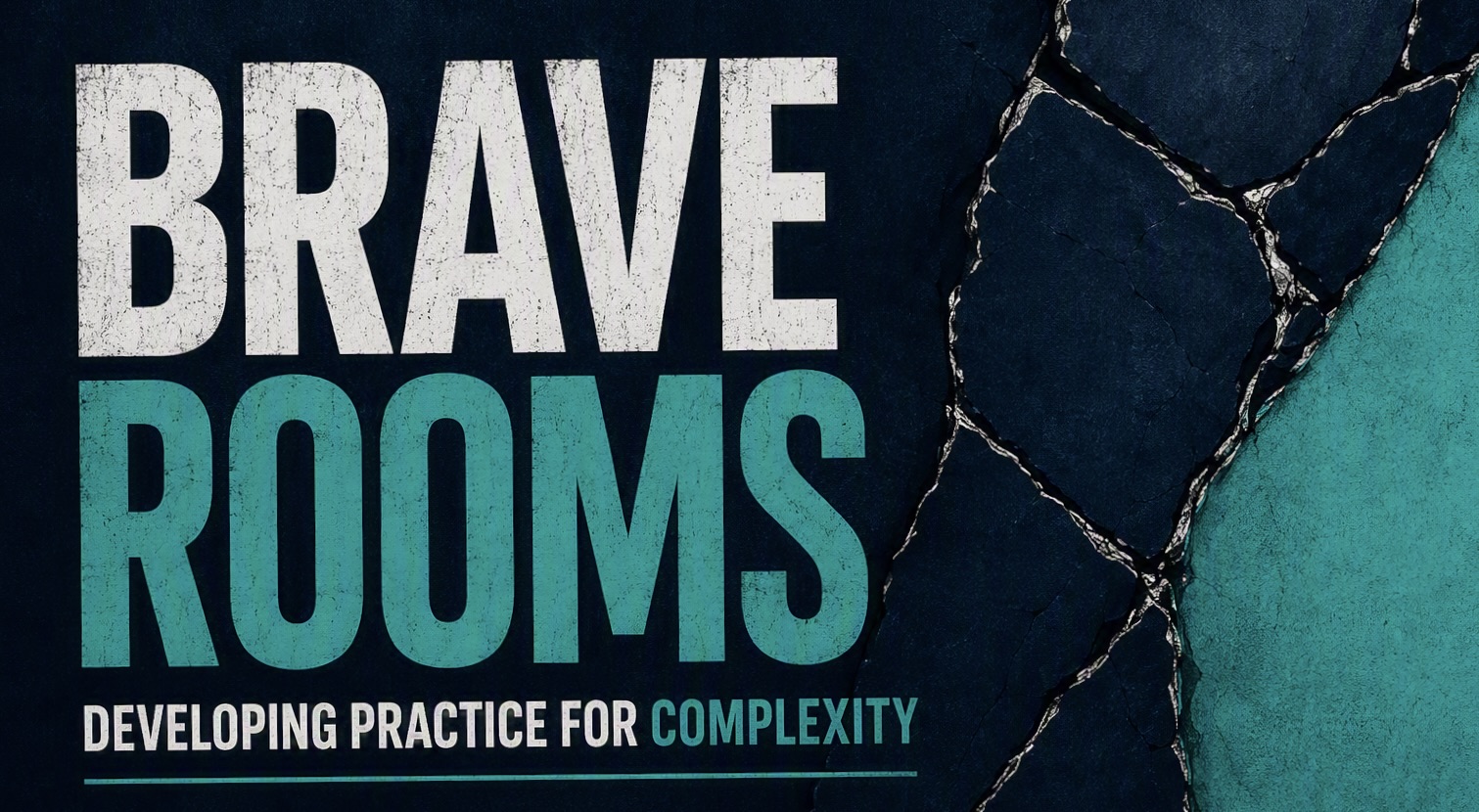
BRAVE ROOMS - Developing Practice for Complexity

UNIQUE IDENTIFICATION NUMBER: RJC300926NI
Restorative justice is changing. The question is whether our practice, processes and accountability frameworks are changing quickly enough with it.
Across community, criminal justice, institutional and organisational harm settings, practitioners are being asked to work in contexts where harm, trauma, power, public scrutiny and organisational accountability are increasingly visible.
Some skills travel across contexts. Others cannot simply be lifted from one setting and applied unchanged to another.
That is the challenge at the heart of Brave Rooms.
What do we carry forward? What must we adapt? What new knowledge, safeguards, supervision, governance and process oversight are now needed to hold restorative work safely?
Brave Rooms: Developing Practice for Complexity is a one-day national conference convened by the Restorative Justice Council for people who do not want to stand at the edge of these questions, but to be part of shaping the sector’s response.
Join us at the Stormont Hotel, Belfast, for a different kind of conference: a focused, participatory working space for practitioners, leaders, commissioners, policymakers, government departments and organisational partners who are serious about safe, ethical and accountable restorative practice.
EVENT DETAILS
Date: 30 September 2026 - 09:00 - 16:00
Venue: Stormont Hotel, Belfast
Delegate Fee: £50 - Buffet Lunch Included
Attendance: Limited to 100 delegates
A Must-Attend Working Conference for the Next Phase of Restorative Justice
Brave Rooms has been designed for people who know that restorative practice cannot rely on courage or experience alone. It requires craft, judgement, reflective development and the right process architecture around the work.
Throughout the day, delegates will explore how restorative practice changes across:
- Community-based practice
- Criminal justice practice
- Institutional and organisational harm
- Multi-institutional harm
In each context we will ask:
- How does complexity present in this context?
- Which practitioner skills transfer?
- Which assumptions have to be challenged?
- What must be adapted before work can proceed safely?
- What governance, supervision, safeguarding and accountability are needed to hold the work well?
A central focus of the day will be the distinction between:
Complexity of Practice: The trauma, harm, relationships, power dynamics, vulnerabilities and human realities that restorative practitioners work with.
Complexity of Process: The safeguarding, assessment, information sharing, governance, supervision, accountability, risk planning and organisational architecture needed to hold that work safely and ethically.
As restorative practice moves across different sectors and settings, understanding the difference matters.
THIS IS NOT A PASSIVE CONFERENCE
Brave Rooms is not a day of polished success stories.
It is a working space for people willing to engage honestly with difficult questions.
- Where is restorative practice currently being stretched?
- Where are our existing processes no longer strong enough?
- What support do practitioners need when complexity presents differently across sectors?
- What accountability should organisations be prepared to accept?
- How do we continue developing restorative practice without creating further harm?
- What does the next phase of restorative justice require from all of us?
The programme combines keynote contributions, facilitated discussion, sector-specific application groups, table-based exercises and whole-room reflection.
Delegates will be invited not simply to listen, but to test ideas, challenge assumptions, learn from other sectors and contribute to a wider conversation about what comes next.
WHY BRAVE ROOMS?
Complexity does not only exist in exceptional or high-profile cases.
It exists in everyday practice:
- in trauma that is not immediately visible
- in power imbalances that remain despite formal equality
- in historic relationships that influence readiness and consent
- in organisational pressure to proceed before conditions are right
- in competing expectations around accountability
- in the risk of causing further harm while attempting repair
Restorative practice cannot rely on courage alone.
It requires judgement.
It requires structure.
It requires supervision.
It requires accountability.
Most importantly, it requires spaces where these realities can be examined openly and honestly.
Brave Rooms has been designed to be that space.
WHY THIS CONVERSATION MATTERS NOW
As restorative justice works across serious, sensitive and institutionally complex contexts, practitioners and organisations are being asked to navigate challenges that existing systems, frameworks and training were not always designed for.
The sector increasingly needs conversations about:
- accountability
- safeguarding
- organisational readiness
- practitioner wellbeing
- risk planning
- governance
- ethical decision-making
- public trust
Brave Rooms will bring together people working across practice, policy, commissioning, leadership and organisational accountability to explore what is changing, what support is now required, and what restorative justice needs to develop next.
ROOTED IN NORTHERN IRELAND. RELEVANT EVERYWHERE.
Northern Ireland has long demonstrated leadership in navigating questions of harm, trust, accountability and legacy.
Brave Rooms is rooted in that context, learning with local practice rather than importing solutions.
At the same time, the challenges explored throughout the day are increasingly relevant across the UK and internationally.
The questions raised in Belfast will resonate far beyond the room.
WHO SHOULD ATTEND?
Brave Rooms is for:
- Restorative practitioners
- Service managers and supervisors
- Commissioners and funders
- Government departments and policymakers
- Criminal justice agencies
- Prison and probation colleagues
- Community organisations
- Researchers and educators
- Organisational leaders
- Anyone responsible for developing safe, ethical and accountable restorative practice
PLACES ARE INTENTIONALLY LIMITED
Attendance is limited to 100 delegates.
This is a deliberate decision.
Brave Rooms has been designed as a participatory working space rather than a lecture-theatre conference. Limiting numbers enables deeper discussion, meaningful reflection and stronger conversation across sectors.
Once places are filled, registration will close.
A QUESTION FOR THE SECTOR
What complexity do we keep avoiding, and what does it cost?
What is the cost to participants?
To practitioners?
To organisations?
To public trust?
Brave Rooms creates space for the sector to explore these questions together.
BRAVE ROOMS
Developing Practice. Strengthening Process. Responding Safely to Complexity.
If you are serious about the future of restorative justice, this is a conference to be in the room for.
Booking Terms and conditions
The following terms and conditions apply to this event:
- Payment of the registration fee must be made prior to the event commencing. Where payment has not been received, the RJC reserves the right to cancel your registration
The RJC reserves the right to amend the content of the provisional programme for this event
All changes made to the programme will be communicated to registered delegates prior to the event start date
Refund policy
In the event that you need to cancel your event registration you can either:
1) transfer your registration to another person
In the event that a higher fee becomes payable, the rjc will invoice this amount to the new delegate
2) request a refund
The RJC will process this request in line with our refund schedule outlined below:
| Within 14 days of booking | 100% |
| Between 15 days and 5 days of the event | 50% |
| Within 4 days of the event | 0% |
Refunds will only be made to the account from which the payment was received
Contact Information
Contact Name: Jim Simon
Email: enquiries@restorativejustice.org.uk
This is an approved Connect CPD event. You can confirm the status of this event HERE.
| Event Pass | £50.00 |